
Introduction
Food choices are influenced by more than taste, price, and appearance. Consumers increasingly want to understand where products come from, how they are handled, what ingredients they contain, and whether their labels provide reliable information. Digital identification systems and online research tools can help people explore these questions more effectively. The term 30.6df496–j261x5 in Food offers a starting point for discussing how unfamiliar food-related identifiers should be examined, interpreted, and verified before conclusions are drawn.
Understanding an unfamiliar code requires a careful approach. A string of letters, numbers, or symbols does not automatically identify an ingredient, prove a product’s safety, or confirm its origin. Reliable interpretation depends on the organization that issued the identifier, the product’s documentation, and the context in which the code appears.
1. Understand the Meaning of Food Identifiers
Food packaging contains several kinds of information, including product names, ingredient lists, batch numbers, manufacturing dates, expiry dates, and barcodes. Each element serves a different purpose. Recognizing these differences prevents consumers from confusing identification details with nutritional or safety information.
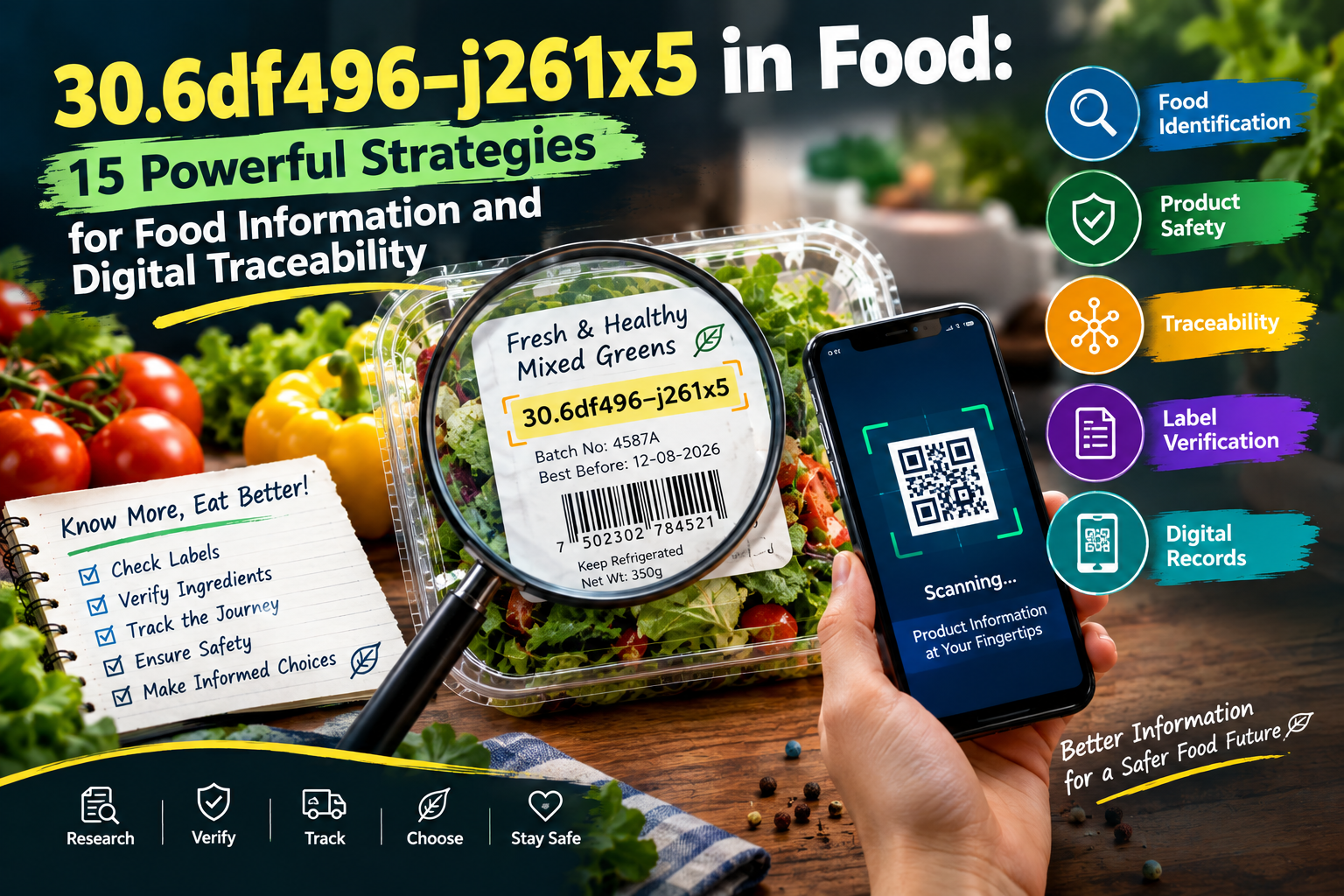
When researching 30.6df496–j261x5 in Food, begin by determining where the identifier was found and how it was presented. Check whether it appears on a package, website, inventory record, product database, or technical document. Its location may provide useful context, but it does not independently establish its meaning.
2. Examine the Original Source
The source of a code matters because different businesses and organizations use different identification systems. A manufacturer may assign internal product references, while a retailer may use inventory numbers and a logistics provider may use shipment identifiers.
Research into 30.6df496–j261x5 in Food should begin with the original source whenever possible. Look for official product documentation, manufacturer information, or an explanation from the organization responsible for the code. If no authoritative explanation is available, describe the identifier as unverified rather than presenting a guess as a confirmed fact.
3. Separate Product Data from Product Claims
A product identifier can help distinguish one record from another, but it is not necessarily evidence that a product is organic, nutritious, authentic, or safe. Those claims require appropriate supporting documentation.
Anyone investigating 30.6df496–j261x5 in Food should separate verifiable details from marketing language. For example, a package might display a code alongside a health claim. The presence of the code does not automatically validate that claim. Consumers should check the relevant ingredients, certifications, testing information, and applicable product documentation.
4. Learn How Traceability Works
Food traceability involves recording relevant information as products move through stages such as production, processing, packaging, storage, and distribution. Records can help businesses investigate quality concerns, locate affected batches, and respond to product recalls.
The topic of 30.6df496–j261x5 in Food can be explored through this wider traceability framework. Ask whether the identifier connects to a documented product record, a batch history, or a supplier record. A useful traceability system should make relationships between records understandable and allow authorized users to verify relevant information.
Read more: Cryptopronetwork com adrian: 12 Practical Ways to Read Crypto Information With Confidence
5. Check Batch and Date Information
Batch numbers and date markings can be important when comparing packages or responding to a safety notice. However, a batch number is not the same as an expiry date, and neither should be interpreted without considering the product’s labeling instructions.
When 30.6df496–j261x5 in Food appears near batch or date information, examine each field separately. Confirm which number identifies the batch, which date refers to production, and which date indicates a recommended or required consumption limit. If the printing is unclear, contact the manufacturer rather than relying on assumptions.
6. Evaluate the Reliability of Online Results
Search engines may return forum posts, copied articles, advertisements, automatically generated pages, and official documents for the same unusual phrase. These sources do not carry equal evidentiary value.
A search for 30.6df496–j261x5 in Food should therefore involve checking publication dates, author details, source ownership, and links to primary documentation. Compare multiple credible sources when possible. If several pages repeat the same claim without independent evidence, repetition alone does not make that claim reliable.
7. Use Digital Tools Carefully
QR codes, barcodes, product databases, and mobile applications can make information easier to access. Their usefulness depends on the quality of the underlying records and the accuracy of the information presented to users.
For 30.6df496–j261x5 in Food, a digital lookup is useful only when the result can be connected to a trustworthy source. Check the destination of a QR code before opening it, especially if it comes from an unfamiliar package or message. Avoid entering personal or payment information simply to access an unexplained food identifier.
8. Review Ingredients and Allergens
Ingredient lists help consumers understand what a packaged product contains. Allergen declarations are particularly important for people who must avoid specific ingredients. Labels should be read carefully because formulations and packaging can change.
Research involving 30.6df496–j261x5 in Food should never replace reading the actual product label. If an identifier leads to a product page, compare its ingredient and allergen information with the package in your hands. When the details conflict or are incomplete, seek clarification from the manufacturer and follow appropriate medical advice for allergy-related concerns.
9. Consider Storage and Handling Records
Food quality can be affected by temperature, moisture, packaging damage, and storage duration. Certain products require specific handling conditions throughout transportation and storage. A product code alone cannot establish that these conditions were maintained.
A practical review of 30.6df496–j261x5 in Food should consider whether relevant storage records are available. For temperature-sensitive products, check the packaging instructions and look for signs of damage, leakage, swelling, or improper handling. Do not consume a product that appears unsafe merely because its identifier produces a digital record.
10. Understand the Role of Manufacturers
Manufacturers often hold information about product specifications, packaging, batch identification, and changes to formulations. Their official customer-service channels may help explain unfamiliar markings or direct consumers to relevant documentation.
If 30.6df496–j261x5 in Food is printed on a particular product, provide the manufacturer with the exact code, product name, package size, and relevant batch details. A clear inquiry makes it easier for the company to investigate. Avoid sharing unnecessary personal information when asking a routine product question.
11. Recognize the Limits of Automated Systems
Automated databases can organize large quantities of information quickly, but they may contain outdated, incomplete, or mismatched records. A successful search does not guarantee that the result refers to the exact item being examined.
When a database returns information about 30.6df496–j261x5 in Food, confirm that the product name, manufacturer, packaging, and batch details correspond to the item under investigation. Treat a missing result as inconclusive rather than proof that a product is fraudulent. Likewise, treat a matching result as a lead that may still require verification.
12. Protect Consumer Privacy
Digital food services may request location access, account creation, contact information, or permission to scan packaging. Some requests may be necessary for a particular service, while others may be unnecessary for a simple product lookup.
Anyone using tools related to 30.6df496–j261x5 in Food should review an application’s permissions and privacy notice. Prefer services that explain how collected data is used and retained. Do not upload receipts, identity documents, or other personal records to an unfamiliar website unless there is a clear and legitimate reason.
13. Improve Recordkeeping for Food Businesses
Food retailers, restaurants, distributors, and manufacturers can benefit from organized product records. Consistent documentation helps staff answer customer questions, investigate complaints, and identify affected products when a supplier issues a warning.
Businesses exploring 30.6df496–j261x5 in Food should establish clear procedures for recording identifiers and linking them to the correct products. Staff should know where records are stored, who can update them, and how changes are reviewed. Regular checks can reduce duplicate entries, outdated information, and confusion between similar product codes.
14. Build a Practical Verification Checklist
A checklist helps consumers and businesses apply the same verification steps consistently. It also makes it easier to explain why a conclusion was reached and which details remain uncertain.
Use the following checklist when examining 30.6df496–j261x5 in Food:
- Record the exact code as printed.
- Identify the product and its manufacturer.
- Locate an official explanation of the identifier.
- Compare packaging, batch, and date details.
- Review ingredients and allergen declarations.
- Check relevant safety notices or recalls.
- Compare digital results with original documentation.
- Contact the responsible organization if uncertainty remains.
This process encourages evidence-based decisions instead of assumptions based on the code’s appearance.
15. Turn Research into Better Decisions
The purpose of food research is not simply to find a definition online. It is to gather relevant information, assess its reliability, and use it appropriately. A careful process helps consumers ask better questions and helps businesses maintain clearer records.
Viewed through this approach, 30.6df496–j261x5 in Food is a useful example of why unusual identifiers need context before they can be interpreted. Reliable conclusions should be supported by traceable documentation, consistent product details, and trustworthy sources rather than speculation or unsupported claims.
Read more: Common Signs of Mold: What Homeowners Should Watch For
Common Mistakes to Avoid
One common mistake is assuming that every unfamiliar code belongs to a standardized food identification system. Another is treating search-engine results as official confirmation. Consumers may also overlook changes in ingredients, confuse production dates with expiry dates, or assume that a digital listing proves a product’s authenticity.
When reviewing 30.6df496–j261x5 in Food, avoid publishing an unverified definition or promising that the identifier guarantees safety. State what the available evidence demonstrates, distinguish confirmed information from possibilities, and update any published explanation when better documentation becomes available.
The Future of Digital Food Information
Digital records may continue to support food traceability, inventory management, product recalls, and communication between businesses and consumers. Their effectiveness will depend on accurate data entry, consistent standards, secure systems, and cooperation among participants in the supply chain.
Future discussions of 30.6df496–j261x5 in Food should focus on evidence and practical use rather than assuming that every code has a universal meaning. Clear explanations and accessible documentation can help users understand how identification systems work and where their limitations remain.
Conclusion
Food identification and traceability are valuable parts of modern product management, but they work best when supported by reliable records and clear communication. Consumers should examine labels, compare relevant details, use digital tools cautiously, and contact manufacturers when information is unclear. Businesses can support these efforts through consistent documentation and transparent procedures.
Ultimately, 30.6df496–j261x5 in Food illustrates the importance of investigating unfamiliar food-related identifiers without making unsupported assumptions. By following a structured verification process, readers can assess information more carefully, recognize uncertainty, and make decisions based on evidence rather than appearance alone.
