
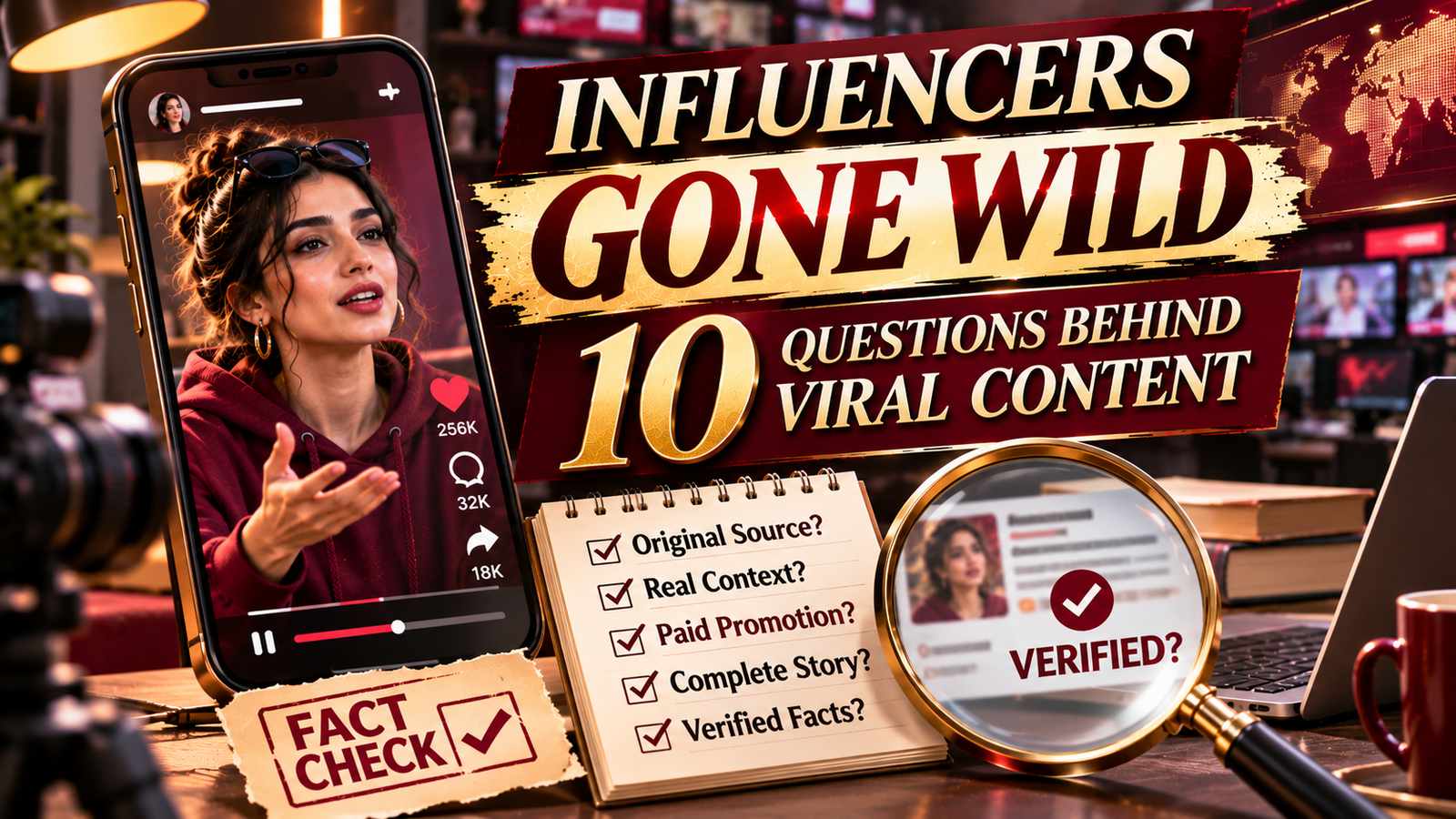
A viral post can look like a complete story. A creator says something unexpected, a clip spreads across social platforms, reaction videos appear and thousands of people decide what they think. Yet the first version of an online story is rarely the whole picture. The original recording may be longer, the caption may leave out important details and the loudest interpretation may not be the most accurate one.
The phrase influencers gone wild is often used to describe surprising behaviour by online personalities. But understanding a viral moment requires more than reacting to a headline. It requires asking who created the content, what evidence is available, how the platform distributed it and what consequences followed. Those questions help readers separate entertainment from reporting and criticism from speculation.
This article uses ten practical questions as a framework for examining creator content. The aim is not to defend every influencer or condemn every mistake. It is to give readers a reliable way to assess online stories while helping creators communicate more responsibly. Looking beyond influencers gone wild headlines can make digital conversations more accurate and less driven by outrage.
1. What is the original source?
Start with the earliest version of the content you can find. A repost may have removed the creator’s introduction, the question they were answering or the explanation that came afterward. Screenshots can also omit the date, account name or surrounding conversation.
When a post is labelled influencers gone wild, do not assume the label describes the full event. Find the original account, inspect the upload date and check whether a longer recording exists. If the source cannot be found, treat the material as incomplete rather than filling gaps with guesses.
Creators can make this process easier by keeping corrections and context accessible. If a clip is being widely misunderstood, a clear link to the complete recording may help viewers assess it. The responsibility to verify still belongs to the person sharing a claim, but accessible source material makes accuracy easier. This is an important distinction when discussing influencers gone wild online.
2. What can the content actually prove?
A video can show words or actions, but it may not prove motivation, intent or events that happened outside the frame. A facial expression does not establish what someone was thinking. A short exchange does not necessarily explain the history between the people involved.
This distinction is important in influencers gone wild coverage because commentary can turn an observable moment into a much larger claim. Separate what is directly visible from what someone believes it means. Use careful wording: “the clip shows” is different from “this proves the person intended to.”
Readers should be cautious when a post makes claims about private motives, health, relationships or criminal conduct without reliable evidence. Creators should avoid presenting speculation about other people as fact. Accuracy begins with knowing the limits of the material. This helps audiences interpret influencers gone wild stories without jumping to conclusions.
3. When did it happen?
Dates change meaning. An old clip may be reposted as if it happened today. A creator may have already corrected a statement, changed a policy or explained the context. Without a timeline, viewers can mistake an earlier version of events for the current situation.
Search for the original publication date and compare it with the date of the reaction posts. If a story is being presented as breaking news, look for independent reporting that confirms when the event occurred. The phrase influencers gone wild can be attached to recycled footage simply because it attracts clicks.
Creators can reduce confusion by dating important updates and linking to earlier statements when they publish a correction. Viewers should avoid sharing old material with captions that imply it is new. A basic timeline often resolves questions that a heated comment thread cannot. This is especially useful when influencers gone wild posts resurface months or years later.
Read more: About Qushvolpix Product: 8 Important Checks Before You Trust an Online Offer
4. Who benefits from this version of the story?
Every post has a publisher and a purpose. A creator may be sharing an experience, a commentator may be seeking views, a brand may be promoting a product and a gossip account may be trying to attract attention. Understanding the source does not automatically invalidate its message, but it helps readers evaluate incentives.
When influencers gone wild is used as a headline, ask whether the account provides evidence or mainly invites outrage. Does it link to the original? Does it distinguish confirmed information from opinion? Does it correct mistakes? These signals help assess reliability.
Creators also need to examine their own incentives. A dramatic response can generate attention, but it may prolong a dispute or spread an unverified claim. Before publishing, consider whether the post informs the audience or simply turns conflict into engagement. This question adds useful context to influencers gone wild discussions.
5. Is there a commercial relationship?
A recommendation may be influenced by payment, a gifted product, an affiliate commission or another connection with a company. That does not automatically make the recommendation dishonest. It does mean viewers should be able to recognise the relationship.
The U.S. Federal Trade Commission explains disclosure principles in its Disclosures 101 guide for social media influencers. Its endorsement guidance discusses truthful endorsements and reviews. These are U.S. resources; creators should check the rules that apply to their own location and audience.
In influencers gone wild discussions about a disputed promotion, separate three questions: Was there a commercial connection? Was it disclosed clearly? Were the product claims accurate? A creator should not claim to have personally tested something if that did not happen, and should not make unsupported promises about results.
Clear advertising disclosures help protect audience trust. They also make it easier to understand whether a recommendation is independent or part of a business arrangement. This is a practical lesson behind many influencers gone wild debates.
6. Who is affected by the post?
A viral story can involve people who never chose to become public figures. A family member, employee, customer or bystander may appear in a clip or be named in a discussion. Sharing their personal details can cause harm that has little connection to the public issue.
Before reposting content associated with influencers gone wild, consider whether it exposes someone’s address, phone number, workplace, private messages or identifying information. Remove unnecessary personal details and do not encourage people to contact or target someone. Public interest does not justify publishing every private fact.
Creators should seek permission before posting identifiable footage of other people where appropriate, especially in sensitive settings. If a post reveals private information, remove or obscure it and use the platform’s reporting tools where necessary. Responsible discussion focuses on relevant actions, not unrelated personal exposure. This keeps influencers gone wild coverage focused on the actual issue.
7. Has the creator responded, and what exactly did they say?
A response can add context, correct an error or introduce further claims. It should be assessed like any other source. A creator’s statement is relevant, but it is not automatically the final word. Equally, a reaction video is not automatically more reliable because it sounds confident.
In influencers gone wild coverage, compare the response with the original material. Does it address the specific issue? Does it acknowledge what is known? Does it correct factual errors? Does it explain a practical next step? Avoid treating an apology as proof that every allegation is true or treating a denial as proof that nothing happened.
Creators can respond more effectively by slowing down. Identify the issue, state what is confirmed, correct mistakes and explain what will change. If facts are still being checked, say so rather than making a rushed statement. A response should help the audience understand, not simply demand that the discussion stop. That is a healthier way to handle influencers gone wild attention.
8. What would count as meaningful accountability?
An apology can be an important first step, but it is not the same as a lasting change. If a creator made an inaccurate product claim, a meaningful response might include correcting the post and reviewing how future claims are checked. If private information was shared, the creator may need to remove it and strengthen their privacy process.
The phrase influencers gone wild can make accountability sound like a public performance. In practice, useful accountability is specific and proportionate. It identifies the action, recognises the impact, explains the correction and avoids promises that cannot be kept.
Audiences should look for evidence of improvement over time. Creators should not expect instant forgiveness, but they should also not be subjected to endless harassment after taking reasonable corrective steps. Accountability should address the conduct rather than become an excuse to attack someone’s unrelated personal life. This approach gives influencers gone wild stories a more constructive outcome.
9. Is the reaction proportionate to the evidence?
Online attention can grow much faster than the available evidence. A minor mistake may be treated like a major scandal, while a serious concern may be buried beneath jokes and reaction clips. The number of comments does not tell readers how severe an event is.
When influencers gone wild becomes a trending phrase, ask whether the criticism matches what is confirmed. Is the issue a factual error, a poor judgement, a broken promise or a genuine safety concern? Different problems call for different responses. Avoid repeating allegations that remain unverified.
The Reuters standards and values provide a useful reference for thinking about accuracy, independence and verification in reporting. Readers do not need to become professional journalists to apply these principles: check the source, preserve context and correct mistakes. These habits make influencers gone wild discussions more responsible.
10. What lesson remains after the trend disappears?
The final question is not simply whether a creator gained or lost followers. It is whether the event changed how the creator works, how the audience evaluates information or how a brand communicates with customers. A trend may disappear, but its lessons can remain useful.
For creators, that may mean clearer sponsorship disclosures, better review processes, stronger privacy settings or a more realistic publishing schedule. For audiences, it may mean checking dates, watching complete clips and avoiding pile-ons. For brands, it may mean assessing a creator’s conduct and audience trust rather than relying only on follower counts.
The lasting value of influencers gone wild discussions comes from learning to evaluate online behaviour with care. A viral moment should prompt questions, not replace them. When the immediate excitement fades, a better-informed audience and more responsible creator practices are outcomes worth keeping. That is the real lesson behind influencers gone wild.
A quick verification routine before sharing
Use this short checklist when a controversial post appears:
- Locate the original source and check its date.
- Watch or read the complete material where possible.
- Separate what is visible from what is inferred.
- Check whether a commercial relationship is disclosed.
- Look for reliable independent reporting on important claims.
- Read the creator’s response without treating it as unquestionable proof.
- Avoid sharing private information or encouraging harassment.
- Correct your own post if you discover that it was inaccurate.
This routine is especially useful when a headline uses influencers gone wild to attract attention. A label is not evidence, and a large number of reposts is not independent confirmation. If the facts remain unclear, say that they remain unclear.
Read more: The Psychology of Beauty: Why Makeup Makes Us Feel Confident
Frequently Asked Questions
What does “influencers gone wild” mean?
It is an informal phrase used for surprising, controversial or attention-grabbing behaviour by online creators. It is not a formal category and does not prove that a specific allegation is true. The original source and surrounding context still matter.
How can I tell whether a viral influencer clip is misleading?
Check the original upload, publication date and full recording if available. Compare the caption with what the footage actually shows, and look for reliable reporting when the claim is significant. Do not treat repeated reposts as separate confirmation.
Should I believe an influencer’s apology?
Consider whether it addresses the specific issue, corrects inaccurate information and explains a practical change. An apology is one piece of information, not automatic proof that every claim is true or false.
Do influencers have to disclose paid promotions?
Creators should follow the advertising and consumer-protection rules that apply to their location and audience. In many jurisdictions, material relationships such as payment, gifts or commissions need clear disclosure. Official regulator guidance is a useful starting point.
How should viewers respond to online controversy?
Verify claims, criticise specific actions rather than private lives, avoid spreading personal information and do not participate in harassment. These habits make online discussions more constructive.
Conclusion
Online stories are shaped by more than the original post. Sources, editing, timing, commercial incentives, private information and public reactions all influence what audiences believe. Asking ten simple questions can help readers understand what is known, what remains uncertain and what a responsible response might look like.
The phrase influencers gone wild may be useful for finding a topic, but it should never replace verification. Creators build trust by communicating honestly and correcting mistakes. Viewers strengthen digital culture by checking context before sharing and keeping criticism proportionate. The most valuable outcome of a viral story is not another round of outrage; it is a more informed online community.
